

Hard water 101
What the 2023 utility numbers mean for a Greenfield kitchen, and how to test your own tap.
Water softener installation · Greenfield, WI
Greenfield Water Softener installs and replaces water softeners, and installs whole-house filter and softener systems, Iron Curtain iron filters and reverse osmosis drinking water systems. We match the system to what your water shows: a softener for hardness, a filter for taste or sediment, an iron filter only when a test finds iron.
2023 utility sampling: median total hardness 137 mg/L, about 8 grains per gallon. That sits in the “hard” class.
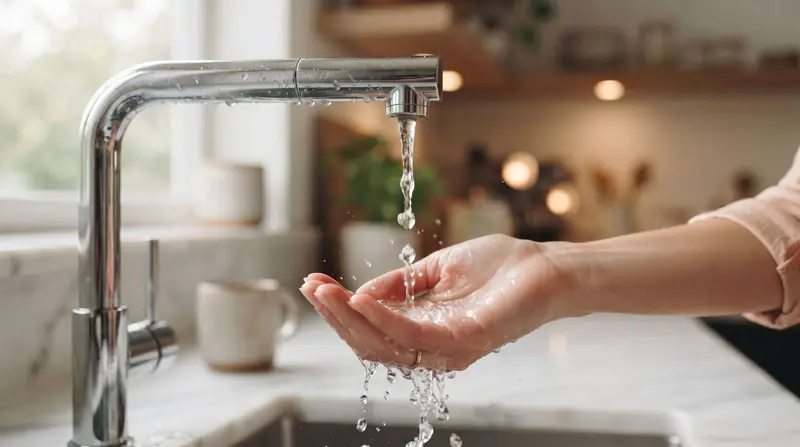
Greenfield’s tap water is treated Lake Michigan water from Milwaukee Water Works: safe, closely monitored and mineral-rich enough to leave white rings on a kettle and film on a shower door. Start with the dated numbers below and a quick test at your own tap, then call to talk through which system fits, if any. Read Hard Water 101.
Where Greenfield water comes from
The City of Greenfield does not run its own treatment plant. Its water page explains that Greenfield is a retail customer of Milwaukee Water Works, which supplies the water, maintains the distribution pipes and handles billing. Milwaukee Water Works’ 2025 Annual Water Quality Report lists Greenfield among its retail communities and names Lake Michigan as the source. The lake water’s minerals stay with it the whole way to your tap; inside your house, the plumbing, the water heater and any equipment already installed decide what you finally see.
Hardness is not a health measurement, so the annual safety report does not include it. The utility does publish a longer general-chemistry sheet for its distribution system. The 2023 edition, based on samples analyzed during 2023, reports total hardness between 130 and 156 mg/L with a median of 137 mg/L. Divide by 17.1 and the median works out to roughly 8 grains per gallon, the unit most softener controls use.
Two cautions keep that figure honest. It describes the whole Milwaukee Water Works system, not a Greenfield street or a single house. And it is a 2023 snapshot: lake water changes slowly, but a newer sheet could read a little differently. Your own test result is the number that should drive any setting or purchase.

What 8 grains looks like at home
None of these proves your home needs equipment. They tell you what to measure first.




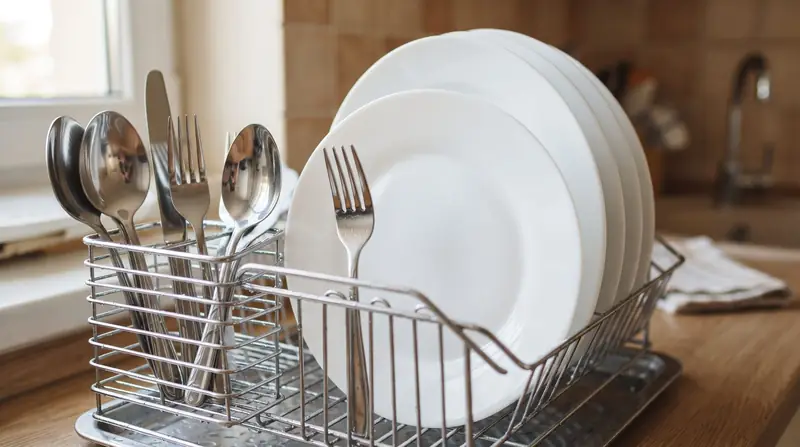
Chalky rings on faucet aerators, a haze on glassware and flaky scale in the kettle are calcium carbonate drying out. Water at about 8 grains does this steadily, especially wherever water is heated.

Dissolved calcium ties up part of every squirt of shampoo or dish soap, leaving a dull curd on tubs and sinks. You may reach for more detergent, or find bath towels drying a little scratchy.

Milwaukee Water Works’ 2023 sampling did not detect iron, so rust-colored stains usually start inside the house: older pipe or a water heater. That needs a different fix, explained in Softeners and iron.
What we install, and when it fits
Ion exchange pulls the hardness out before water reaches the heater, the dishwasher and every faucet, which is where scale costs money. It asks for floor space near the main, a drain, an outlet and regular bags of salt. We install new softeners and replace older ones: see our softener installation. A correctly sized and set softener typically means less scale and spotting; results depend on your water and settings.
Disinfectant taste, grit or rust each have a matching filter type, and none of them touches hardness. We install whole-house filter and softener systems when a test shows both jobs, and Iron Curtain iron filters only when a test shows iron in the incoming water.
Water near 8 grains sits at the lower edge of the “hard” class, and plenty of homes manage it with a vinegar soak for the kettle and showerhead now and then. That is a legitimate decision, and the guide Softener, filter or both? helps you weigh it.
Five minutes, one strip
Strips are for hardness only. Questions about lead or bacteria belong with a state-certified laboratory.

Guides
What the 2023 utility numbers mean for a Greenfield kitchen, and how to test your own tap.

Ion exchange explained with the actual mix of minerals in Greenfield’s supply.

Why orange stains need a different diagnosis than white crust.
Monthly, seasonal and yearly checks that keep a softener working.
Match the equipment to the problem a test actually found.
No. Milwaukee Water Works reports its regulated results every year in its annual water quality report. Calcium and magnesium are not on the list of regulated contaminants; they matter for scale and cleaning, not safety.
Program it from your own tap test. The 2023 utility median of about 8 grains per gallon is a reasonable cross-check, not a substitute for measuring.
No. Ion exchange targets calcium and magnesium. Lead, microbes and other health questions call for testing and treatment chosen for that specific concern.
Contact Greenfield Water Softener
Call with your test result and what bugs you about your water, and we can talk through which system we would install for it, or whether you need one at all.
Send a message
Share what you are noticing and we’ll follow up.